Platform
The agents do the work. Your team decides what ships.
Four surfaces: what they know, what they do, what they pass, and where your team picks it up.


Context
The agents start from what your company knows
The agent reads all of it before it writes a word: your rules, your systems, and the market outside.
- Yours
- Rules, glossary, attribute model, and the systems you already run.
- And what you do not control
- Search demand, what the engines answer, and what a category must state.

What the agents know
Apparel · Online storeYOURS
Your rules
Tone, forbidden claims, conventions
Your glossary
Approved terms, per language
Your systems
Feed, PIM, barcodes, brand sheet
Your attribute model
Families, and what each one requires
OUTSIDE
Search demand
The questions buyers actually ask
AI answers
What the engines say about the category
Product databases
What the manufacturer published
Regulation
What the category has to state
Set up with your team, then changed by them
Agents
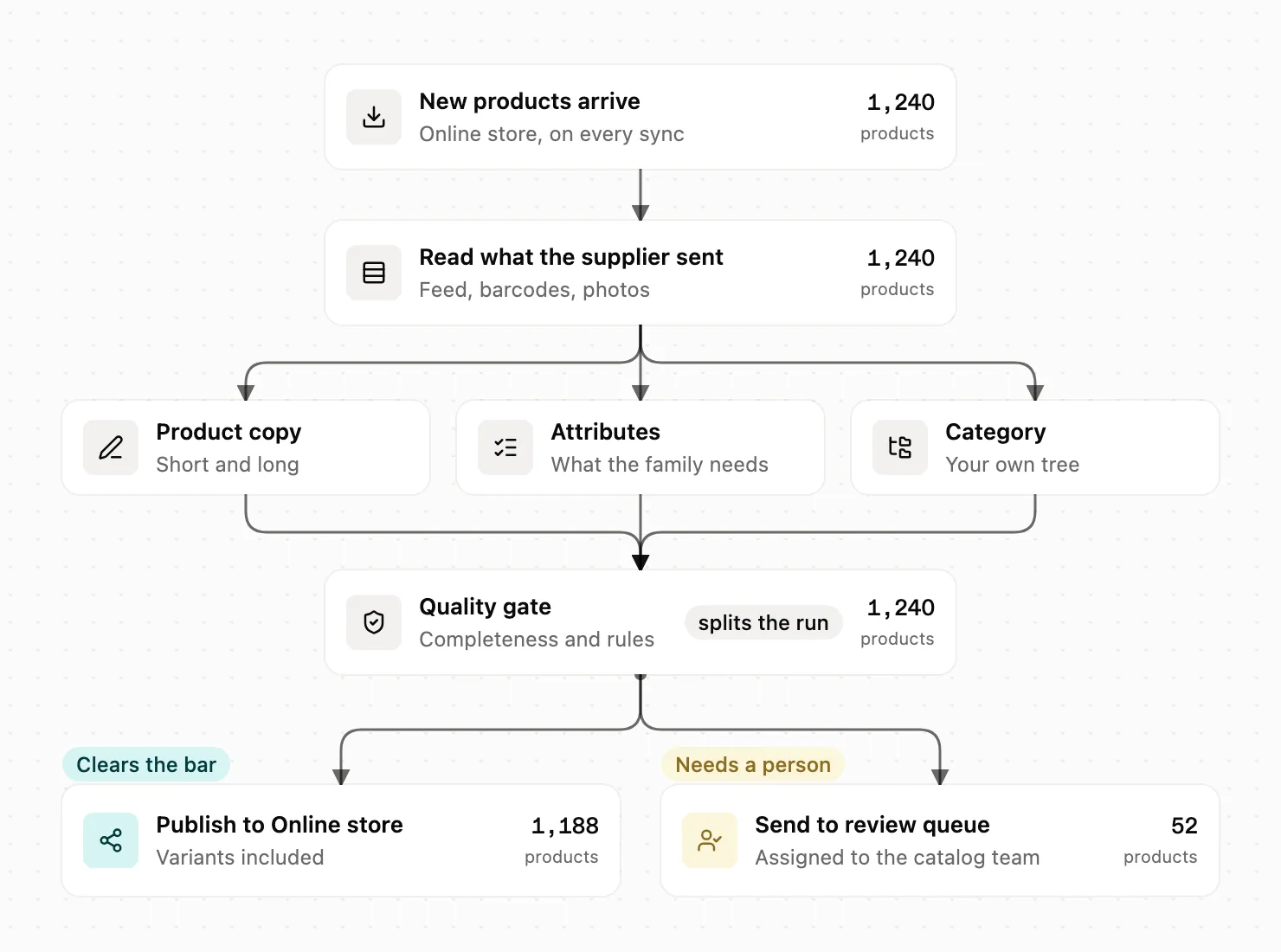
You give it the target. It builds the plan.
Bring the number you are measured on and the date you need it by. The agent works out the steps.
- Fitted to one catalog
- Same shape for everyone, your model inside.
- Human in the loop
- What the checks cannot settle is held for a person to decide.

Building the workflow
From your KPIsThe workflow it wrote
Governance
Your rules become the standard every agent is held to
Encoded once, scored on every output, and a person decides what the score cannot settle.
- Measured, not asserted
- Every agent carries a quality target, and every output is scored on it before it moves.
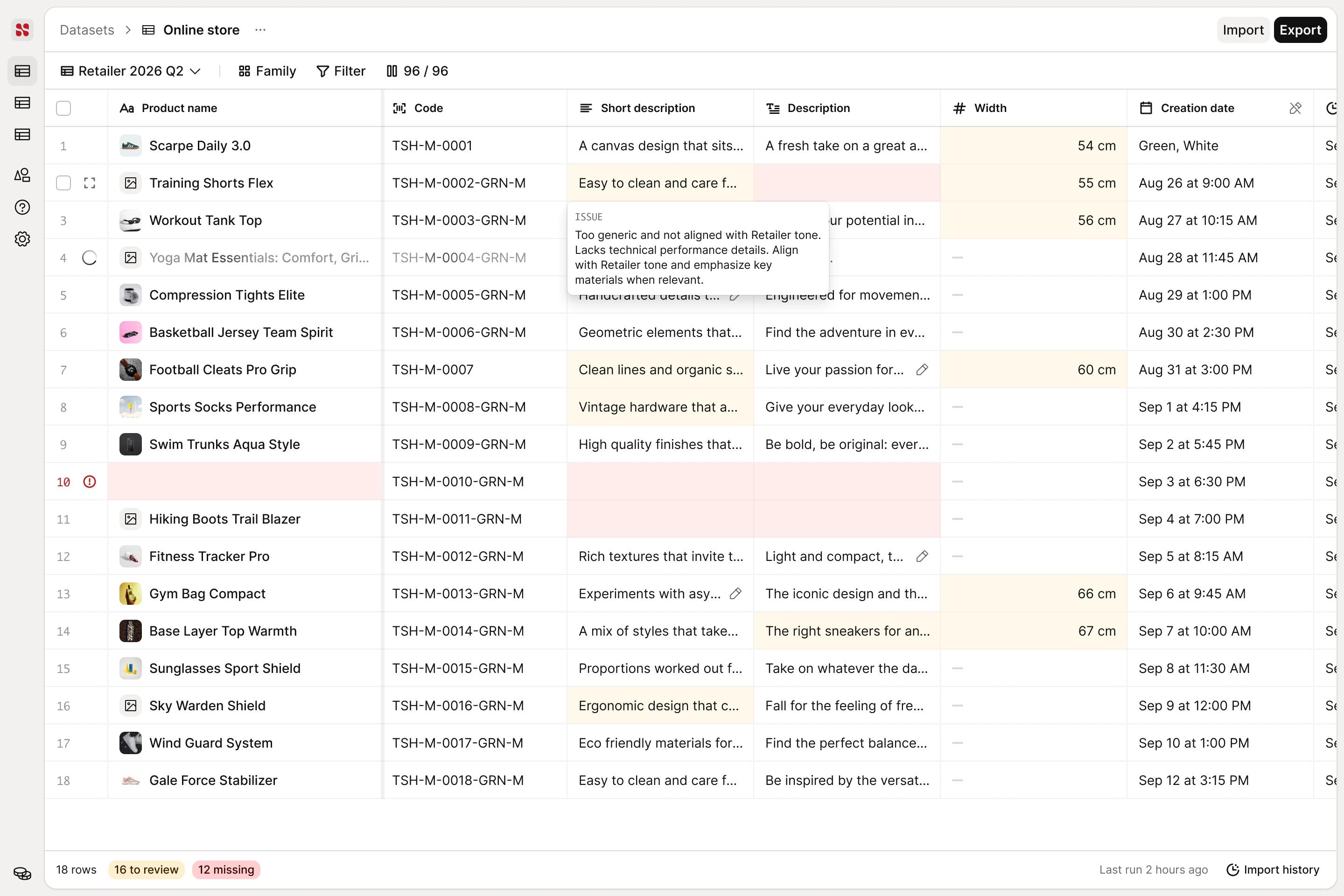
- Explainable one value at a time
- The rule it failed, and the sentence it would have written.

Grid View
The screen your team works in
Your team goes straight to the values the agent could not settle, marked in the cell.
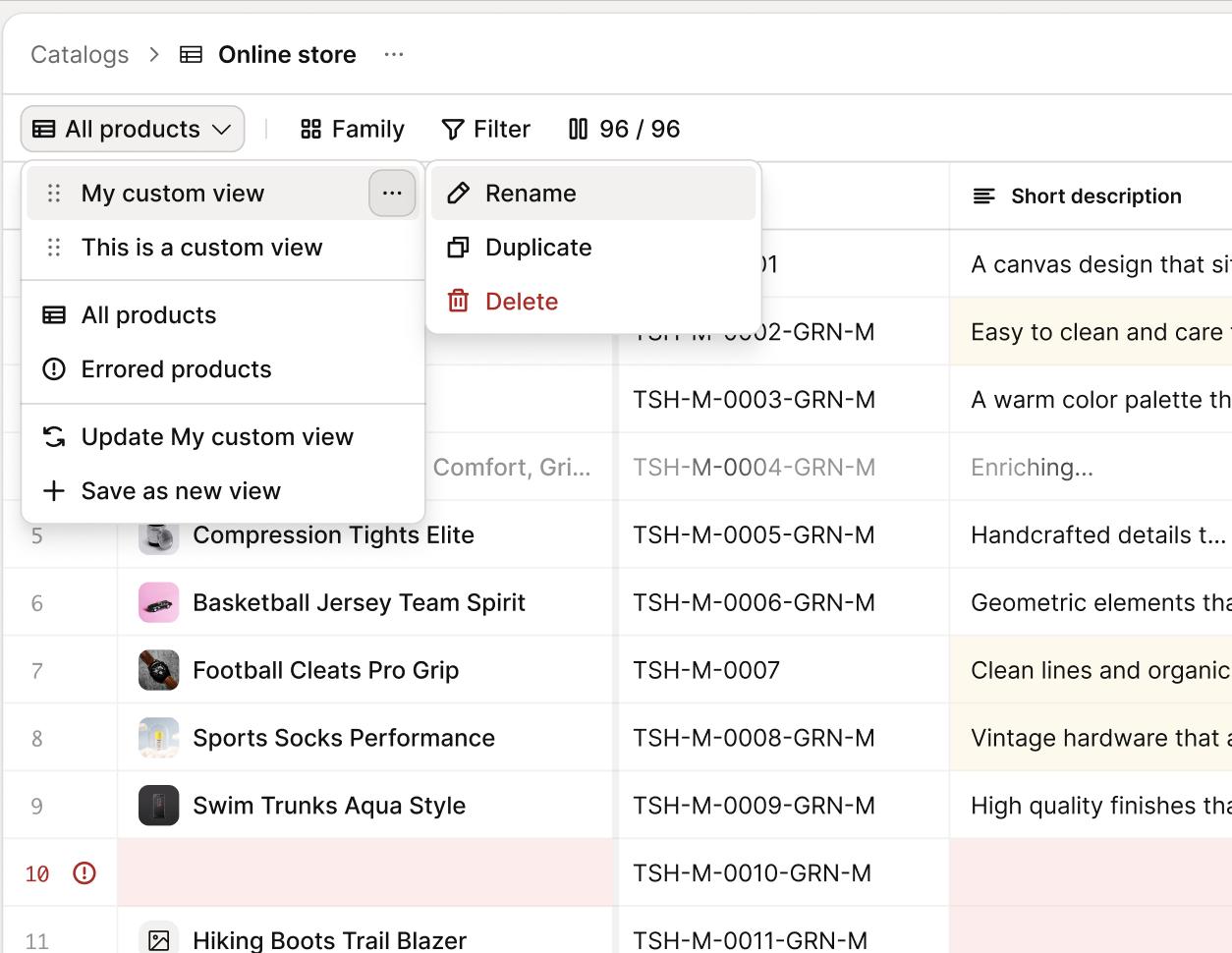
- The view is the export
- Build it once, save it, and export it in the column order you set.
- A thousand rows in one gesture
- Filter, select, and run an agent on the selection.

Questions